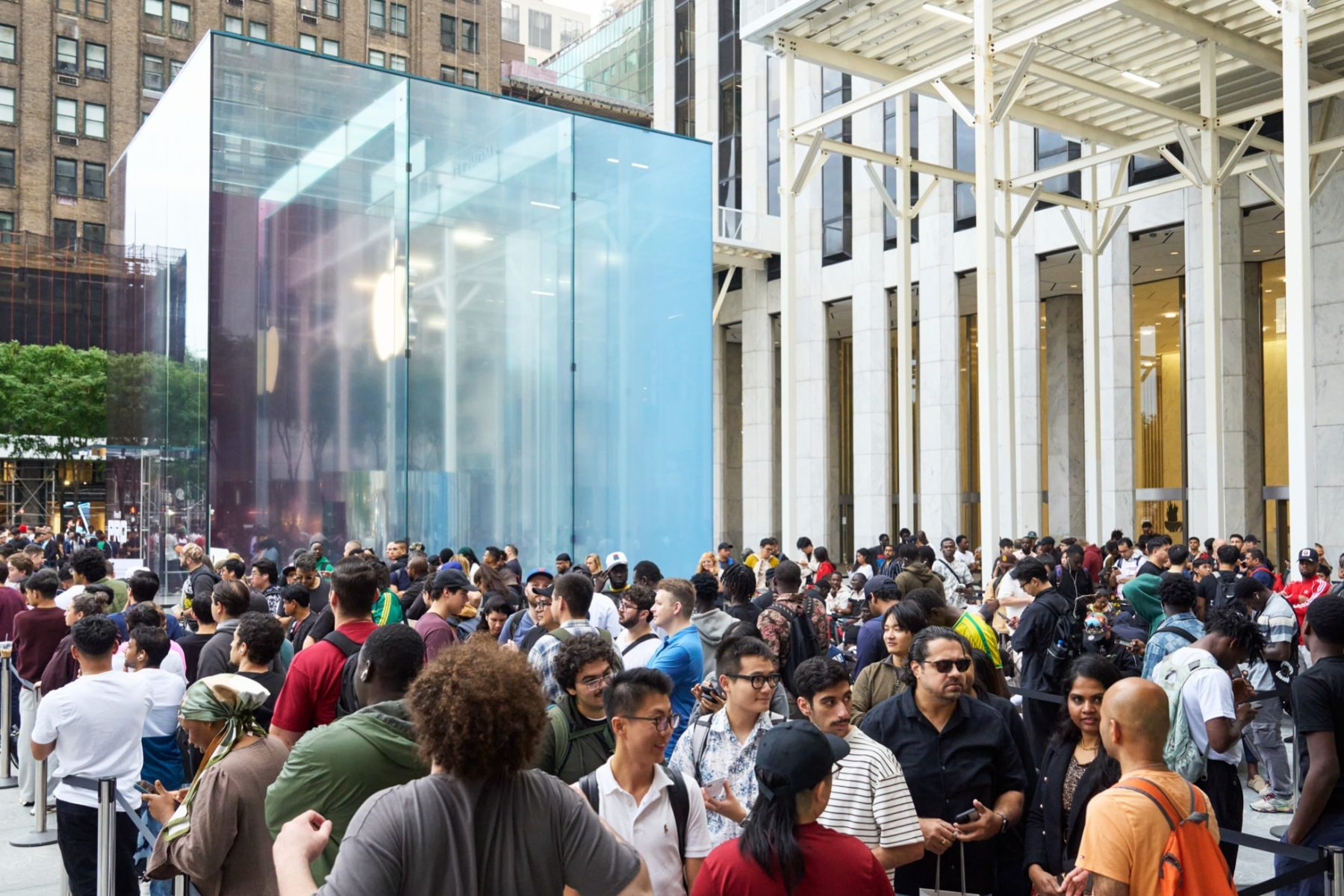
Apple beat on sales. The margin guide sank it.

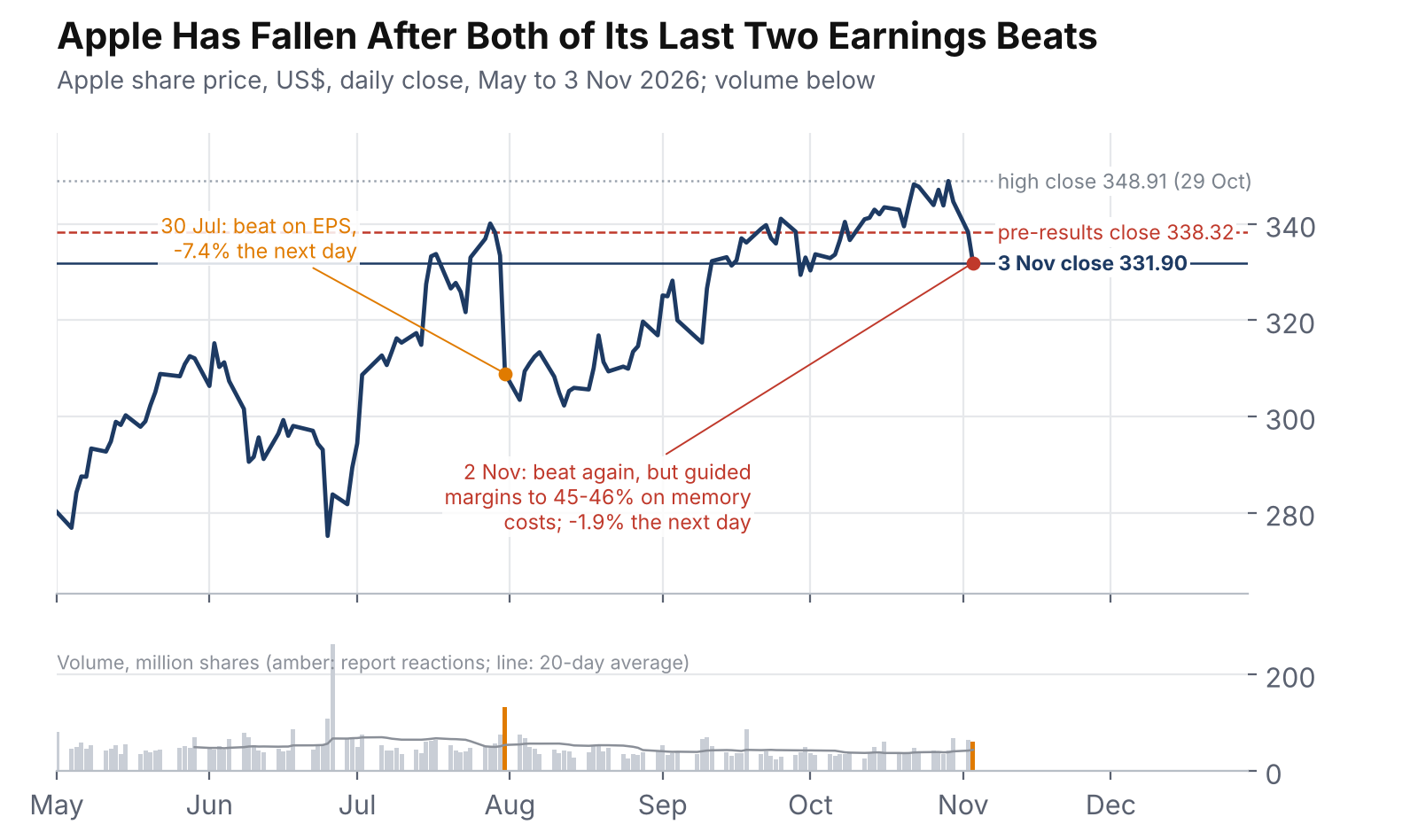
Apple sold more in a September quarter than ever before and still lost 1.9% the next day. The reason is one line in the outlook: a gross margin of 45% to 46% for the holiday quarter, under every forecast on the Street, with memory chips getting more expensive and no sign that this stops in December.
The short version
- Revenue of $114.48B (+12%) and EPS of $2.10 (+14%) both beat. The iPhone set a September-quarter record.
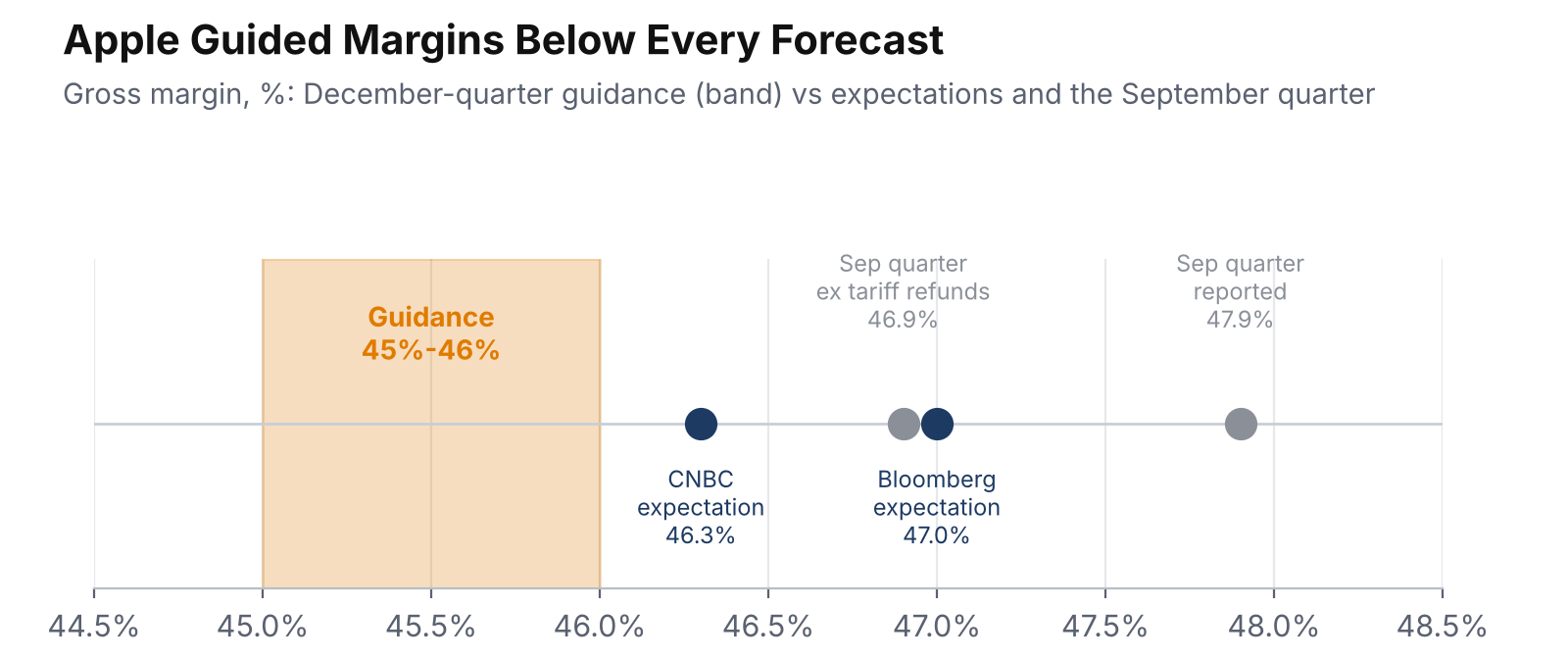
- December-quarter gross margin was guided to 45%-46%. Analysts had 46.3% to 47% in their models.
- The stock was down 4.7% before the bell on 3 Nov and closed 1.9% lower at $331.90, on a day the Nasdaq 100 gained 0.7%.
Key numbers
| Item | Actual | Expected / comparison |
|---|---|---|
| Revenue, quarter to 26 Sep 2026 | $114.48BBeat | $113.39B expected; $102.47B a year ago |
| Diluted EPS | $2.10Beat | ~$2.00 expected; $1.85 a year ago |
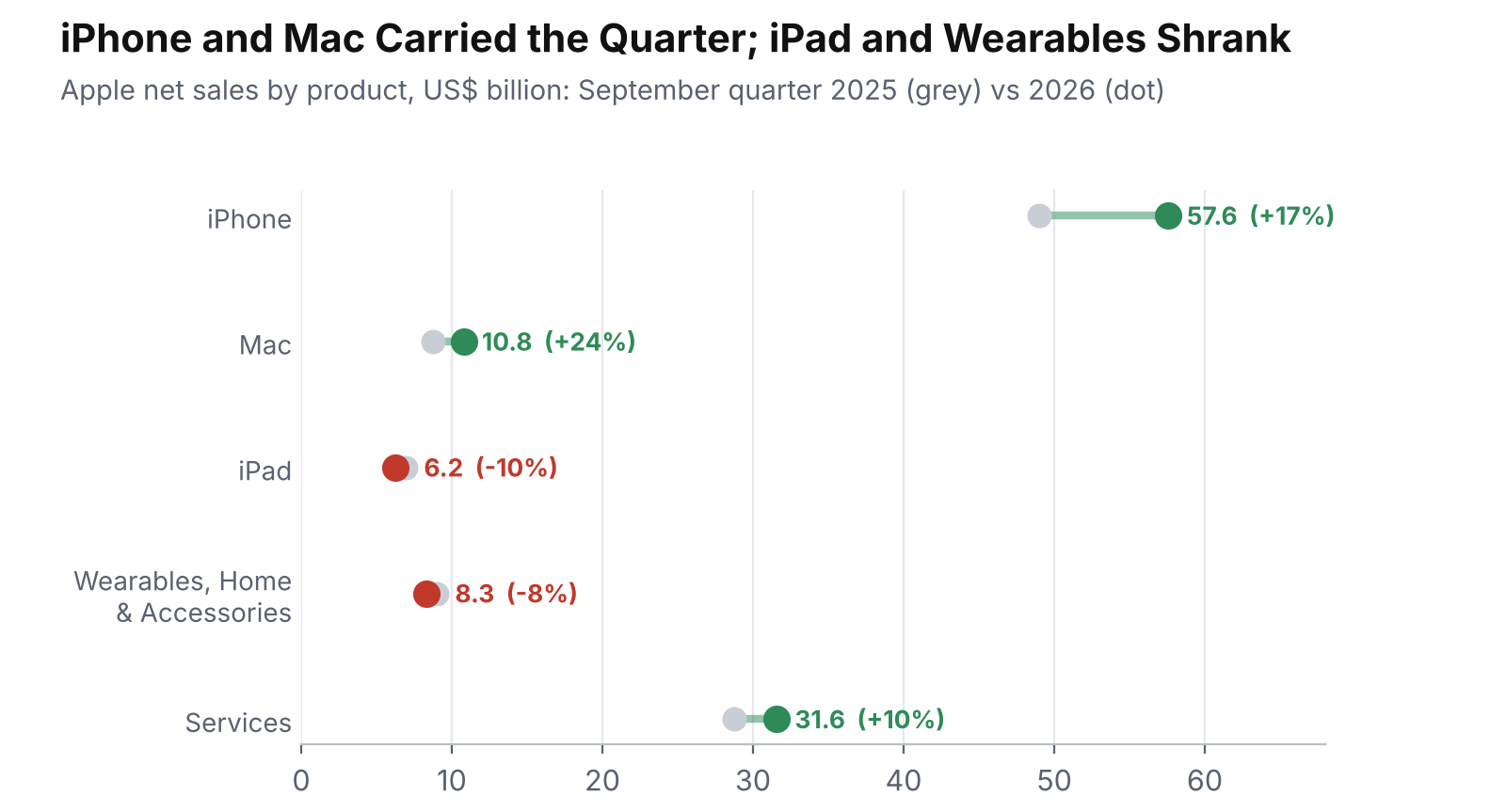
| iPhone | $57.58B (+17% y/y)Beat | ~$56.54B expected |
| Services | $31.57B (+10% y/y)Record | record |
| Mac / iPad | $10.79B (+24%) / $6.23B (-10%) | iPad below expectations |
| Greater China | $17.54B (+21% y/y) | |
| Gross margin | 47.9%, incl. ~1 pt from tariff refunds | |
| Dec-quarter guide: gross margin | 45%-46%Miss | 46.3%-47% expected |
| Dec-quarter guide: revenue growth | +7% to +10%Beat | +6.1% expected |
| Dec-quarter guide: Services growth | +8% to +9%Miss | ~10.7% expected |
| Report | Mon 2 Nov, 4:30 p.m. ET / 21:30 GMT | |
| Stock, Tue 3 Nov | -4.7% pre-market; close -1.9% at $331.90 | options priced about ±3.9% |

What happened
Apple reported after the close on Monday, 2 November. It was John Ternus' first quarter as chief executive, and the headline numbers went his way. Revenue rose 12% to $114.48 billion. Diluted EPS climbed 14% to $2.10. Net income came to $30.71 billion.
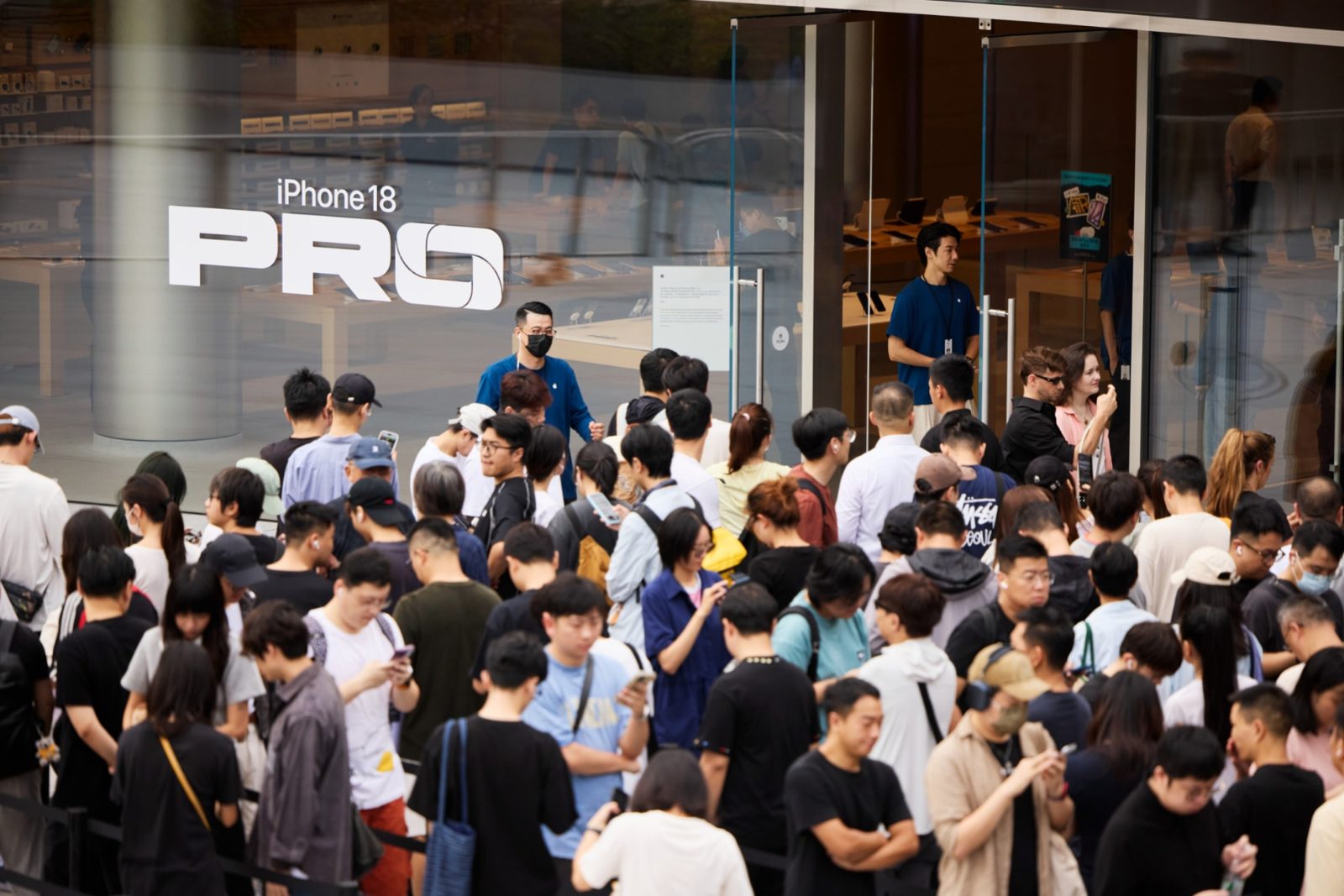
The iPhone did the heavy lifting at $57.58 billion, up 17%. Mac grew 24%. iPad (-10%) and wearables (-8%) went the other way. Services added 10% to $31.57 billion, and Greater China, a soft spot for two years, grew 21% to $17.54 billion.
Gross margin printed at 47.9%. Take out roughly a point from tariff refunds and the run rate is closer to 46.9%. The board declared a $0.27 dividend, payable 16 November.
Then CFO Kevan Parekh gave the outlook. Revenue growth of 7% to 10% in the December quarter, ahead of the 6.1% analysts had modelled, which he called Apple's "best view of constrained supply." Services growth of 8% to 9%. And a gross margin of 45% to 46%.
Why the stock fell
- The margin guide. 45%-46% sits below every forecast published before the call. Against the underlying 46.9%, Apple is telling investors to expect one to two points less in a single quarter.
- Memory costs are not a one-off. Ternus called memory pricing "unprecedented" and said costs keep rising after December. Supply will also cap Mac and iPad shipments over the holidays. Investors forgive a soft quarter. A cost problem that runs into next year means lower earnings estimates.
- Services is slowing. Apple's highest-margin business normally cushions hardware costs. At 8%-9% growth against roughly 10.7% expected, that cushion is thinner.
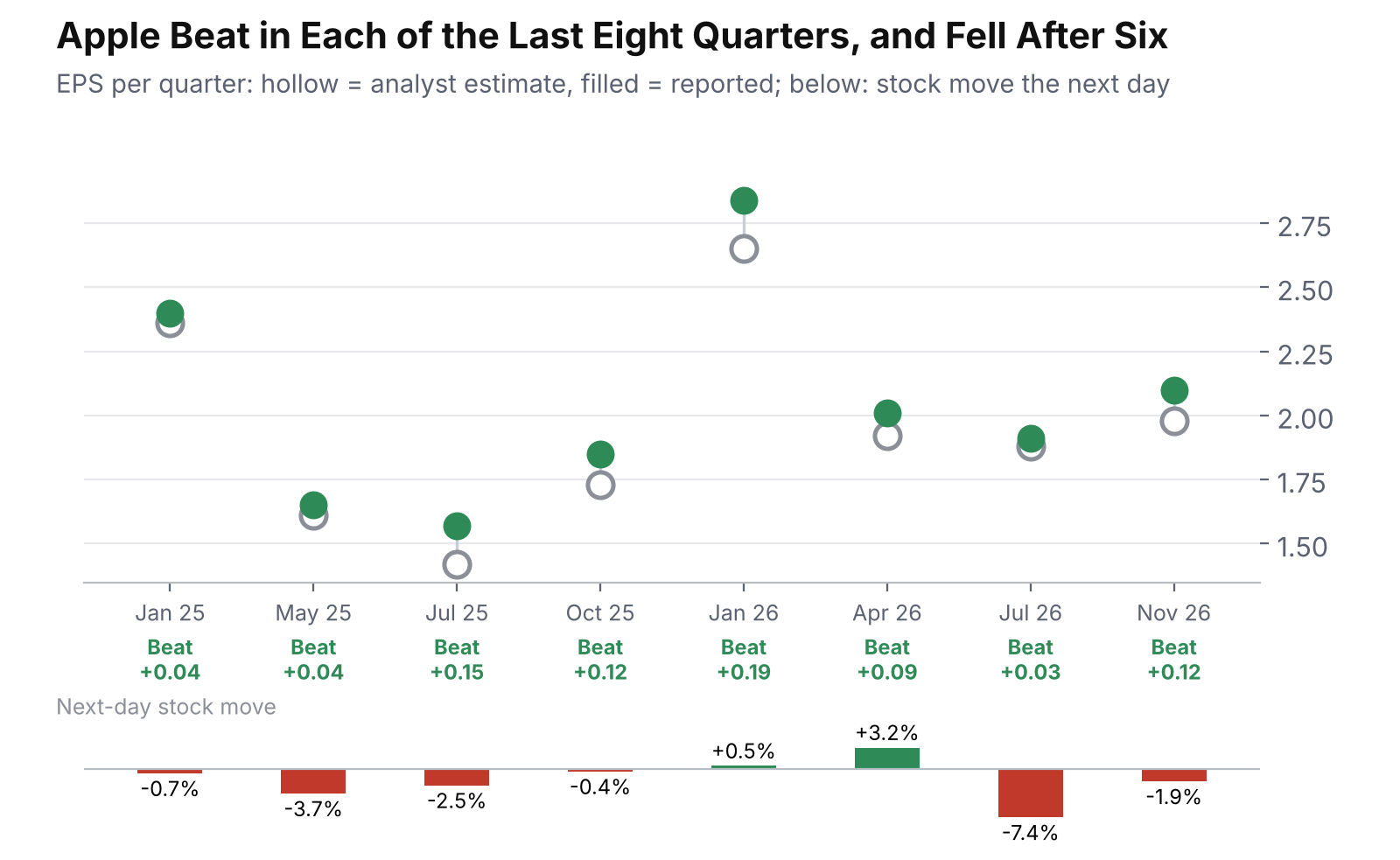
Most of the good news was already in the price. Options had priced a move of about 3.9% for report day. The stock went through that before the open, then won back half the loss by the close. It's the second quarter in a row that Apple has dropped on a beat: after the July report it fell 7.4% the next day.
Apple and the AI memory squeeze
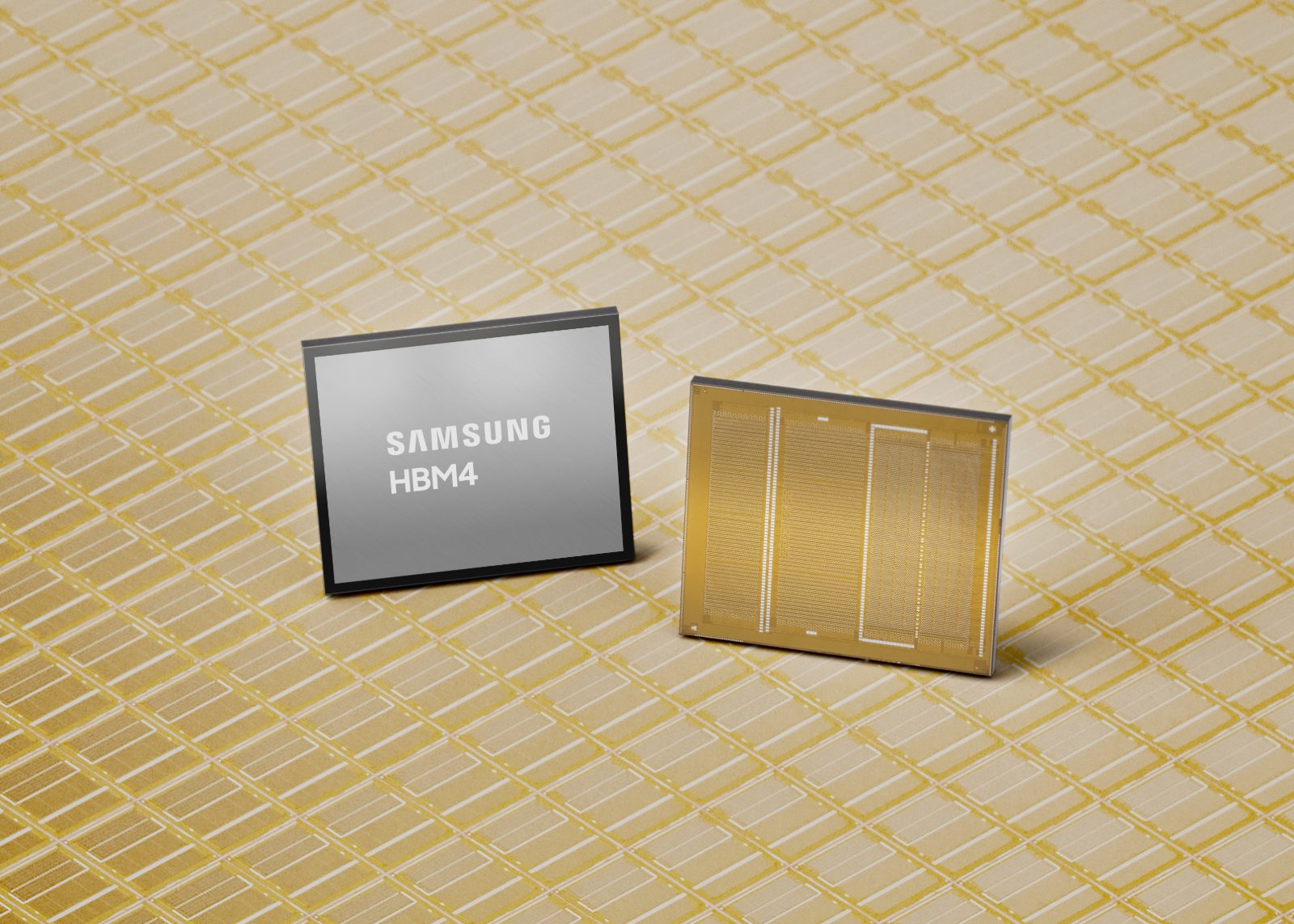
This year's market has run on AI spending and the chips that spending buys. Our desk still sees it as the main story, but a fragile one: positioning is crowded, and investors keep asking when the money comes back. Memory prices are where the strain shows first, and Apple is the first big buyer of memory to put a number on it.
3 November split that chain cleanly. The Philadelphia semiconductor index gained 2.6%, from 10,328 to 10,600. AMD guided fourth-quarter revenue to about $17 billion against roughly $16.2 billion expected and jumped about 8% after hours. Apple pays for memory instead of selling it, and it fell. The sellers of AI hardware got paid. A buyer of the same parts got marked down.
Was it Apple or the market?
The first question after any big report: did the stock move on its own news or with the index? On 3 November there's no doubt. The Nasdaq 100 rose 0.7%. Apple fell 1.9%.
The move came in two stages. After hours and before the open, the stock traded 4% to 4.7% lower, already past what options had priced. Once the regular session opened, with full volume and time to digest the call, buyers took back about half. The first stage was a reaction to the margin headline. The second weighed record sales and a stronger revenue guide against it.
Watch how good reports get treated over the next few weeks. When a solid quarter gets sold, as Apple's was, investors are trimming the trade. When one gets bought, as AMD's was, they're still adding. Nvidia reports on 17 November, and that is the big test.
Positioning going in
Investors went into earnings long overall but careful with tech. In the week to 27 October, asset managers held about 923,000 net long S&P 500 futures contracts, an 84th-percentile reading. In the same week they cut their Nasdaq 100 futures longs by about 12,400 contracts to 65,400. Money was already easing out of concentrated tech before the reports started. The Nasdaq 100 then closed in correction on 2 November, more than 10% off its high, while the Dow rose.
Across markets
- Semiconductors: memory makers' pricing power is Apple's margin problem, and chip stocks rallied on it. Nvidia and Broadcom were among the gainers, and Nvidia took back the title of most valuable company from Apple ($4.98 trillion vs $4.84 trillion at the close).
- Indices: the Nasdaq 100 rose 0.7% to 28,180.26 but stayed in correction, about 10% below its high. Apple weighed on the Dow. The S&P 500 ended a three-day losing run.
- Rates: Apple wasn't the macro driver. Election day and September job openings were: 7.52 million against roughly 7.1 to 7.2 million expected, released at 10:00 a.m. ET.
The bull and bear case
Demand isn't the issue. iPhone and Mac grew by double digits, Greater China grew 21%, and the revenue guide beat expectations despite supply limits. Memory squeezes have hit hardware makers before and faded once supply caught up.
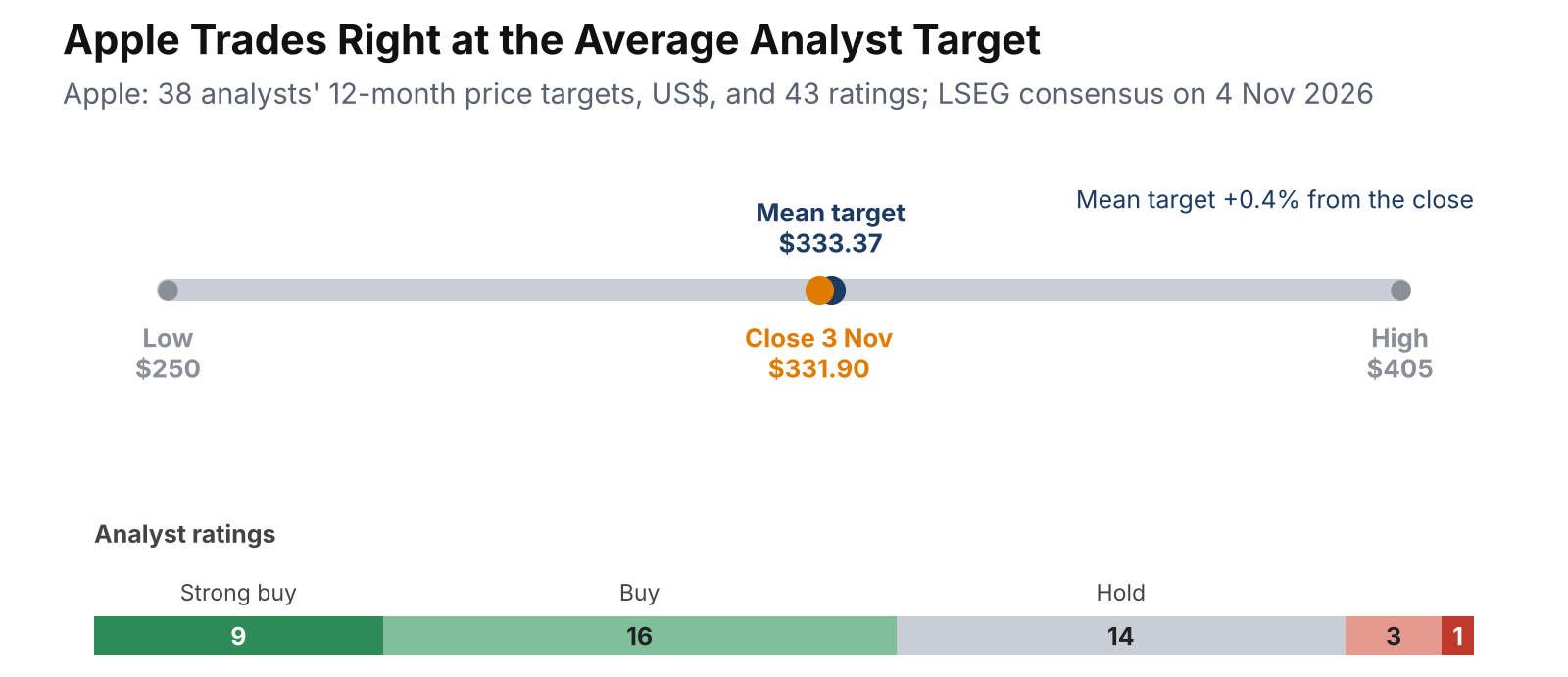
Management says memory costs keep rising past December, and Services, the margin cushion, is slowing. If 45%-46% becomes the run rate, next year's EPS estimates have to come down, and Apple is priced as a quality compounder, not as a hardware maker with input-cost risk.
What's next
- Ongoing
Memory pricing: what memory makers say about contract prices into 2027. Their price is Apple's cost.
- Ongoing
Estimate revisions: whether full-year EPS forecasts come down after the guide.
- 6 and 10 Nov
Macro this week: US jobs report on Friday 6 Nov, CPI on Tuesday 10 Nov. Both move the rate backdrop for large-cap tech.
- Late January
The December-quarter report (late January, date not confirmed) is the real test of 45%-46%.
What would change the picture: a margin print at the top of the range, or signs from management that memory costs have peaked.
Why can a stock fall after a clear beat? Our mentors walk through it in why stocks fall after good earnings.
Covers earnings, central banks and cross-market moves for the Prime Terminal Market Desk.
Market information, not investment advice.